

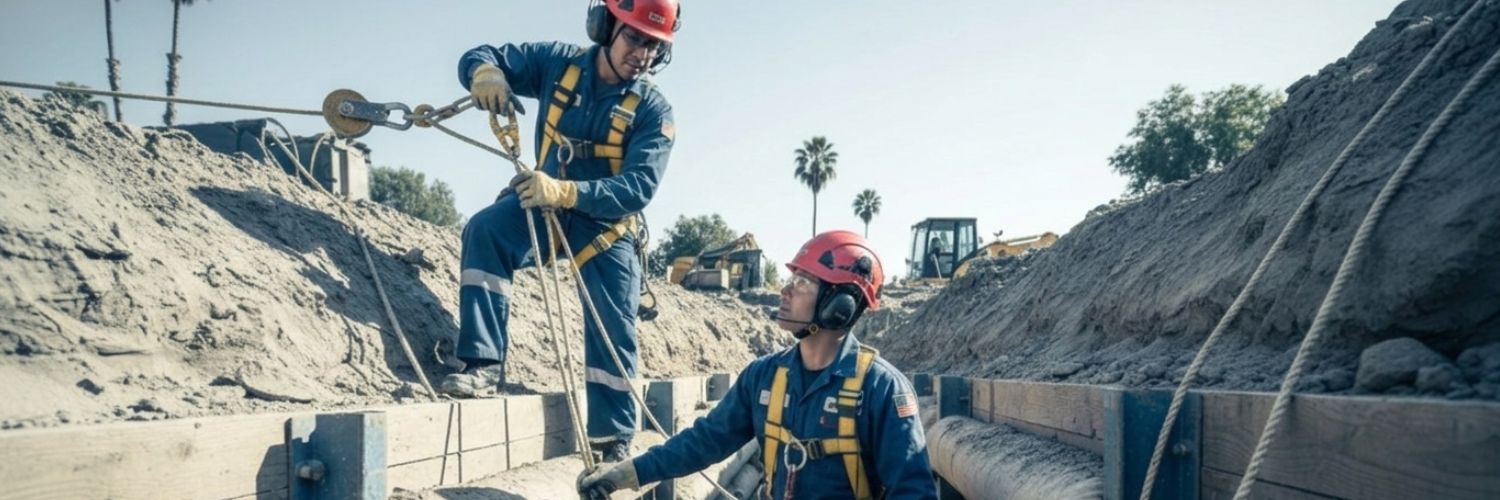
Excavation sites are among the most volatile environments in industrial operations. A single soil shift can trigger a catastrophic collapse in seconds. For industrial safety managers, navigating the technical complexities of OSHA 1926 Subpart P often creates significant operational anxiety. Effective trench rescue planning requires more than just basic compliance. It demands a clinical approach to site stability and a clear path toward risk mitigation.
This guide provides the technical framework for managing high-risk operations with absolute precision. You will gain a clear understanding of the engineering differences between shoring and shielding systems. We also detail the protocols for securing certified rescue standby teams to protect your personnel. Our objective is to facilitate zero-incident project completion through rigorous safety engineering and methodical planning.
Key Takeaways
- Define trench rescue as a specialized technical operation to ensure full regulatory compliance.
- Understand how soil weight and hydrostatic pressure create lethal conditions during an excavation collapse.
- Compare shoring, shielding, and sloping methods to implement the most effective ground stabilization protocols.
- Learn why dedicated on-site rescue teams offer superior protection over standard municipal emergency responses.
- Identify how professional intervention mitigates risk and protects personnel in high-stakes industrial environments.
Understanding Trench Rescue: Definitions and Regulatory Requirements
OSHA 1926 Subpart P Compliance
Federal law mandates protective systems for any trench exceeding five feet in depth. OSHA 1926 Subpart P requires a “Competent Person” to oversee all excavation activities. This individual must possess the authority to stop work immediately if hazards emerge. If soil shows signs of fissuring, the Competent Person must halt operations to re-evaluate the site. These high-risk environments often overlap with Confined Space Rescue requirements. Both disciplines demand clinical precision and specialized atmospheric monitoring to ensure technician safety.
The Critical Distinction: Rescue vs. Recovery
Time represents the most critical variable in a trench emergency. The “Golden Hour” defines the narrow window for preventing suffocation and crush syndrome. This Trench Rescue Overview explains the immense physical forces involved in a collapse. One cubic yard of soil can weigh as much as a small vehicle. When the survivability window closes, the mission transitions into a recovery phase. Recovery operations prioritize site stability and forensic integrity over speed. Rescue saves lives; recovery retrieves evidence.
DCS Rescue provides authoritative technical standby services to manage your site’s most complex risks. Our clinical approach ensures full regulatory compliance while protecting your most valuable assets. We provide the expertise necessary to navigate high-stress industrial crises with absolute confidence. Contact Us today to secure your job site.
The Physics of Trench Collapses and Soil Mechanics
One cubic yard of soil weighs approximately 3,000 pounds. This mass equals the weight of a small car. Gravity pulls this weight downward and inward at all times. Soil exerts pressure in every direction. When you dig a trench, you remove the essential lateral support for the surrounding earth. The remaining soil seeks its natural angle of repose. This movement often happens without warning. Hydrostatic pressure from groundwater further destabilizes the trench walls. Vibrations from nearby traffic or heavy machinery trigger secondary collapses. Personnel must respect the “Lip” or “L-Zone.” This critical area extends from the edge to the spoil pile. Placing equipment on the Lip exerts immense pressure on the trench face. Shallow trenches often create a false sense of security. A collapse in a five-foot trench can bury a worker completely. Weight on the chest immediately prevents breathing.
Identifying Soil Classifications (A, B, C)
OSHA categorizes soil into three distinct types. Stable rock remains intact under exposure. Type A soil includes cohesive materials like clay. This soil possesses high compressive strength but cracks when dry. Type B soil consists of silt or sandy loam. Type C soil lacks cohesion entirely and requires the most aggressive shoring. Rain or vibration can downgrade soil classification in minutes. A competent person uses visual and manual tests to determine soil stability and classification.
The Mechanics of a Cave-In
Wedge failure occurs when the wall breaks at an angle. Shear wall collapses involve a sudden vertical drop of the trench face. Sloughing is the progressive crumbling of soil into the excavation. Total collapses eliminate all air pockets. Soil fills every void around the victim’s body. Entrapment leads to crush syndrome. This condition occurs when compressed muscles break down and release toxins. The process releases these lethal toxins into the bloodstream once the pressure is removed. Specialized Trench Rescue Technician Training ensures teams can manage these complex medical and structural crises.
Critical Safety Systems: Ground Padding, Bridging, and Shoring
Stabilization begins before any technician enters the hazard zone. We prioritize ground padding to immediately secure the trench lip. This prevents localized collapses caused by the weight of rescue personnel. Rescuers place 4×8 plywood sheets around the entire perimeter. These sheets distribute “lip” pressure and provide a stable working surface. We strictly enforce the 2-foot rule for all equipment and spoil piles. Moving heavy loads away from the edge reduces the risk of secondary cave-ins. Technical rescue technicians use bridging to create an engineered platform. This system spans the trench to keep weight off the vulnerable walls. Adhering to OSHA Trenching and Excavation Standards ensures a controlled environment during high-stakes operations.
Shoring vs. Shielding vs. Sloping
Shoring applies active pressure against the trench walls. This prevents soil movement before it starts. Shielding uses heavy boxes to protect workers from falling debris. It does not prevent a collapse. Sloping cuts the walls back at a safe angle. This removes the vertical face entirely. Each method addresses specific soil types and site constraints. A successful trench rescue relies on these calculated engineering controls.
Ground Padding and Bridging Best Practices
Ground padding is the first step in stabilizing the rescue area. We use 4×8 plywood sheets to mitigate lip pressure. The 2-foot rule keeps spoil piles and tools away from the edge. Bridging creates a safe platform for technical rescue technicians. This distributes weight across a larger surface area. Engineered bridging prevents vibration from compromising the trench integrity. These protocols ensure a secure environment for every trench rescue operation.
Establishing a Standby Trench Rescue Team for Industrial Projects
Relying on municipal fire departments for industrial trench rescue is a strategic error. Local departments often face extended response times. They may lack the specialized equipment required for complex collapses. An on-site certified team provides immediate, 24/7 technical intervention. This presence lowers site anxiety and ensures regulatory compliance. Our Safety Professionals act as a dedicated shield for your workforce. A Site-Specific Rescue Plan (SSRP) is mandatory for any excavation exceeding five feet. It provides a clear path forward during a crisis.
Permit-Required Entry and Site-Specific Plans
Rigorous documentation prevents accidents. Professional Permit Writing identifies every latent hazard before entry begins. A trench-specific rescue plan must include several critical components:
- Defined ingress and egress points.
- Real-time atmospheric monitoring data.
- Specified extraction methods for incapacitated workers.
- Communication protocols between the entrant and the surface.
Attendant Safety Watches maintain constant vigilance over trench stability. They monitor soil changes and worker vitals without interruption. This role is vital for immediate hazard recognition.
Equipment Requirements for Technical Rescue
Successful trench rescue requires specialized hardware. Teams must have immediate access to pneumatic shores and timber wales. These tools stabilize collapsing walls and create a safe corridor. Ventilation fans are necessary to mitigate hazardous fumes in deep cuts. Continuous atmospheric monitoring is mandatory for any deep excavation. Technicians must also follow Lockout/Tagout (LOTO) protocols. This secures nearby utilities and prevents secondary flooding or electrical strikes. Technical precision in equipment deployment saves lives.
Professional Intervention: Why DCS Rescue is the Industry Standard
DCS Rescue provides specialized safety solutions for high-risk industrial environments. We leverage over 50 years of combined experience across the petrochemical and construction sectors. Our team manages complex hazards with clinical precision. We prioritize absolute technical competence to ensure project continuity and personnel safety. Industrial clients rely on our ability to handle volatile situations with calm, professional authority.
The DCS Rescue Advantage: Certified Expertise
Our technicians undergo rigorous training for trench rescue and confined space operations. Each specialist maintains mastery over technical shoring and atmospheric monitoring protocols. We ensure your site remains OSHA audit-ready at all times. DCS Rescue operates with a dedicated “rescue” mindset. We perform critical interventions rather than simple administrative repairs. This approach mitigates liability and protects lives in the event of unforeseen soil collapses.
- Regulatory Mastery: We maintain strict compliance with OSHA 1926 Subpart P.
- Technical Shoring: Our team deploys advanced hydraulic and pneumatic shoring systems.
- Continuous Monitoring: We utilize calibrated instruments to detect hazardous atmospheres.
- Clinical Execution: Every procedure follows a logical, sequential workflow to minimize risk.
National Reach with Local Technical Precision
We maintain strategic hubs in Los Alamitos, Phoenix, Denver, and Sacramento. This regional presence enables rapid mobilization across Southern and Northern California, Arizona, and Colorado. Our experts integrate seamlessly with your existing industrial Environmental Health and Safety (EHS) teams. We provide comprehensive standby services, hazard assessments, and technical consulting. DCS Rescue bridges the gap between complex regulatory requirements and field execution.
Our methodology focuses on effectively resolving site hazards. We view every project through the lens of a reliable specialist. We remain unfazed by hardware failures or environmental shifts. Our technicians arrive on-site prepared for immediate action. We provide a clear path forward in high-stress industrial scenarios. This commitment to technical excellence defines our role as the industry standard for trench rescue services.
Securing Your Industrial Excavation Site
Trench stability depends on precise engineering and strict adherence to regulatory standards. Understanding soil mechanics prevents catastrophic failures during excavation. Implementing robust shoring and padding systems remains the most effective defense against collapse. Our methodical approach eliminates uncertainty during critical operations. A professional trench rescue standby team ensures immediate intervention when seconds matter most. Industrial safety managers must prioritize these technical protocols to maintain a zero-incident environment.
DCS Rescue provides certified standby teams and safety professionals to secure your high-risk industrial projects. Our team brings over 50 years of combined rescue experience to every site. We provide OSHA-compliant technical field services nationwide. Our specialists deliver technical precision and a clear path forward for your operations. Secure your project with the industry standard in safety and expertise. Contact Us today for a project evaluation.
Frequently Asked Questions
What is the “Competent Person” requirement for trenching?
OSHA requires a designated Competent Person to oversee every trenching operation. This individual possesses the technical knowledge to identify existing and predictable hazards. They maintain the authority to take prompt corrective measures to eliminate risks. A Competent Person evaluates soil conditions and inspects protective systems daily to ensure worker safety.
How deep can a trench be before OSHA requires shoring?
OSHA mandates protective systems for any trench five feet deep or greater. Even shallower trenches require protection if the Competent Person identifies a potential cave-in risk. Professional trench rescue teams prioritize these standards to prevent catastrophic soil failure. Always verify depth measurements and soil stability before personnel enter any excavation.
What is the difference between a trench and an excavation?
An excavation is any man-made cut, cavity, or depression in the earth’s surface. A trench is a type of excavation in which the depth exceeds the width. However, the width of a trench cannot exceed 15 feet at the base. All trenches are excavations, but not all excavations meet the narrow definition of a trench.
Can a fire department provide industrial standby rescue services?
Most municipal fire departments lack the resources for continuous industrial standby. They function as emergency responders rather than proactive safety monitors. Private technical rescue teams provide dedicated, on-site oversight for high-risk operations. These specialists ensure immediate intervention without the inherent delays of a 911 dispatch sequence and off-site mobilization.
How often should a trench be inspected by a safety professional?
A Competent Person must inspect trenches daily before every work shift begins. Additional inspections are mandatory after rainstorms, nearby vibrations, or any event that increases hazards. Documenting these inspections creates a clear safety record and identifies shifting soil conditions. Regular oversight mitigates the risk of sudden wall collapse and ensures structural integrity.
What are the three main types of protective systems for trenches?
Contractors utilize sloping, shoring, and shielding to protect workers from soil collapse. Sloping angles the soil away from the excavation to prevent cave-ins. Shoring uses hydraulic or mechanical supports to provide structural pressure against trench walls. Shielding involves trench boxes that protect workers within a reinforced structure without supporting the earth itself.
What is hydrostatic pressure in the context of a trench collapse?
Hydrostatic pressure refers to the force exerted by water within the soil surrounding an excavation. Saturated ground significantly increases the weight and instability of trench walls. This pressure often triggers sudden collapses during or after heavy rainfall. Managing water accumulation is a critical component of any trench rescue prevention strategy and site stabilization plan.
What should be included in a site-specific trench rescue plan?
A site-specific plan must identify local emergency contacts and the locations of specialized rescue equipment. It details soil classifications, ingress and egress points, and atmospheric monitoring protocols. The plan also defines the specific roles of the rescue team and the Competent Person. Clear communication channels ensure a rapid, clinical response during an industrial crisis.
DCS Rescue provides technical standby services and industrial safety solutions. We deploy seasoned specialists to manage high-risk environments with clinical precision. Our team secures your site and protects your personnel by adhering to rigorous protocols. Trust our experts to provide a clear path forward during complex operations. Contact Us.